

Next-generation sequencing, real-world impact
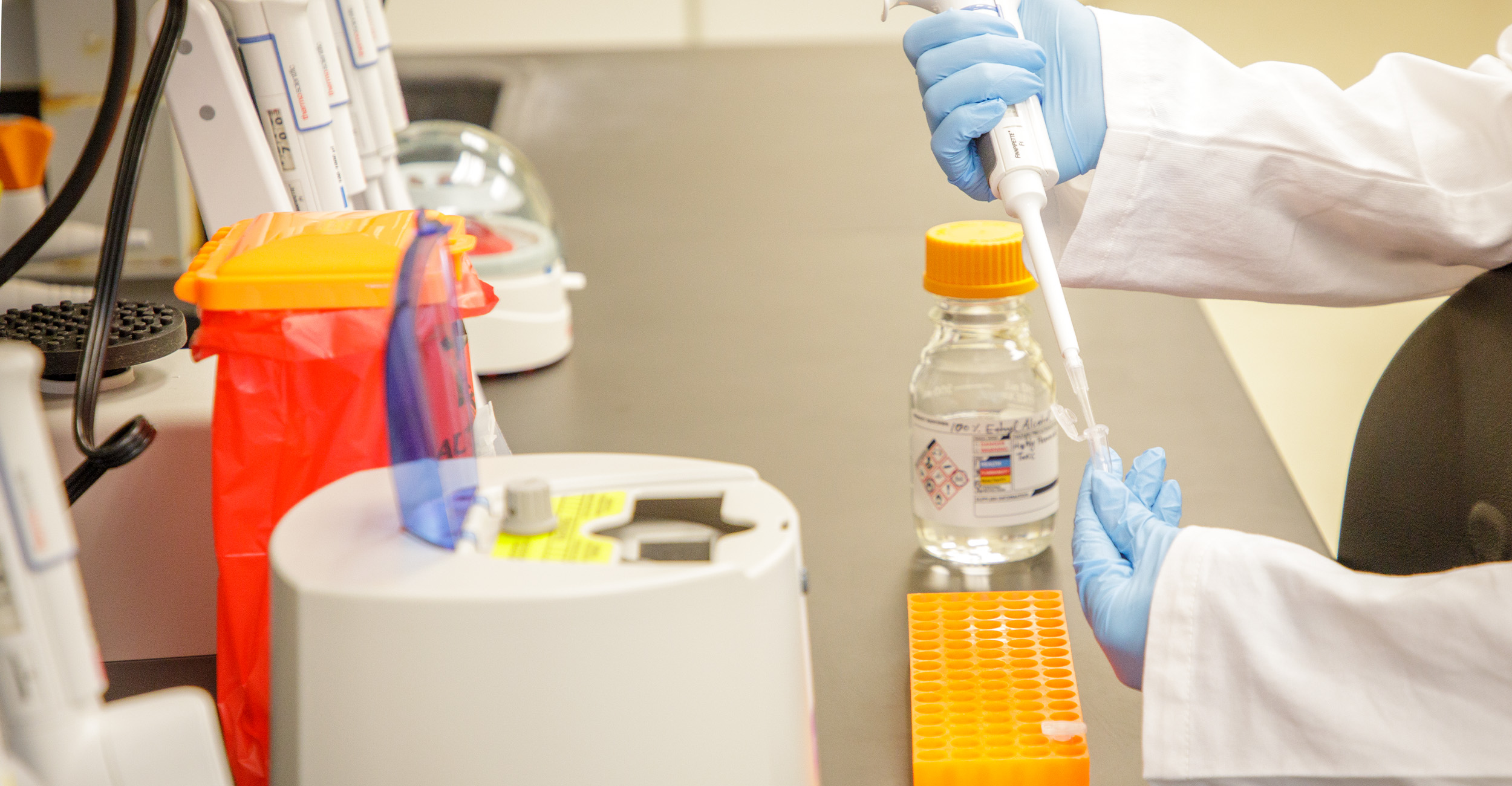
How OSU's Next Generation Sequencing Core Facility helps researchers turn complex questions into meaningful answers
Nestled inconspicuously inside a nondescript building just a few miles from campus is a lab providing cutting-edge sequencing support to Oklahoma State University’s One Health mission.
The Next Generation Sequencing Core Facility serves as a collaborative research hub designed to help researchers turn complex questions into meaningful answers. The NGSCF couples state-of-the-art technology with end-to-end services, helping human, animal and environmental researchers across the OSU System explore health challenges from a truly integrated perspective.
At the heart of the facility is its director, Dr. Samuel Jeyasingh, a veterinarian by training. After spending time in industry, he returned to the place where he received his doctorate to run the NGSCF.
OSU recently caught up with Jeyasingh to discuss what sets the NGSCF apart from other labs, how it fulfills OSU’s land-grant mission and commitment to One Health, and the real-world impacts the work his lab does can have on communities across Oklahoma and beyond.
Q: What does the Next Generation Sequencing Core Facility do?
Samuel Jeyasingh: Our primary mission is to help OSU researchers in terms of providing sequencing services. Regardless of whether the project is connected to human, animal or environmental health, the Next Generation Sequencing Core Facility is here to serve OSU’s One Health mission.
Q: What areas of science can sequencing impact?
SJ: Sequencing touches different areas of health in different ways. We deal with faculty members who are primarily doing human research that impacts significant public health crises. We get several environmental samples, such as bacterial growths or field isolates, to characterize the bacteria present in the environment. We also help with the research and development of diagnostics for human pathogens or animal pathogens.
We also do a lot of what they call genotyping, meaning characterizing the strain or plant species the sample is from. We have started working on wheat genotyping, like wheat genome-breeding projects, here at OSU. Obviously, wheat is a big area of research for OSU, so we have started serving those researchers. Previously, they've been sending samples to the USDA at Kansas State University, but now that we have the capabilities here, we are handling their needs. We are also starting to explore the same with Bermuda grass, which is again, another big area of research for OSU.
Q: What sets the NGSCF apart from other sequencing labs?
SJ: We offer special services such as single-cell sequencing. Instead of doing analysis at a tissue level, that service looks at a single cell level, which can identify what are the genes, like DNA or RNA or protein, that are present in that sample. We are the only ones in Oklahoma to offer that service and are one of the cheapest ones in the U.S. for that service.
So we have external clients, such as the University of Texas Southwestern Medical School, sending patient samples to us to characterize why a patient is responding to a cancer treatment, whereas another person is not, which those technologies can evaluate.
Q: What are end-to-end services, and why is it important that the NGSCF offers those types of services?
SJ: Our lab doesn’t just offer sequencing services alone. We can provide assistance even before a client starts a project, with suggestions on experimental design and how best to obtain the answers they’re seeking. Then, we can obviously help with sequencing the samples obtained during that experiment. However, we don’t stop there, we also offer data analysis services to better understand what the data we obtain tells us about the sample and ultimately the patient.
Q: How quickly can the NGSCF turn around sample results?
SJ: We have been very competitive in terms of our turnaround time. In the fiscal year to date, from July till March, around 35-36 weeks, we have finished over 40 projects — roughly one project a week. So, our turnaround time is two weeks for a project. However, for the single-cell sequencing, it's a lengthier technique, it's a complicated process, and that's why not everyone does it. Those projects take around four weeks for us to completely wrap up.