

What’s all the buzz about drones at OSU-Tulsa?
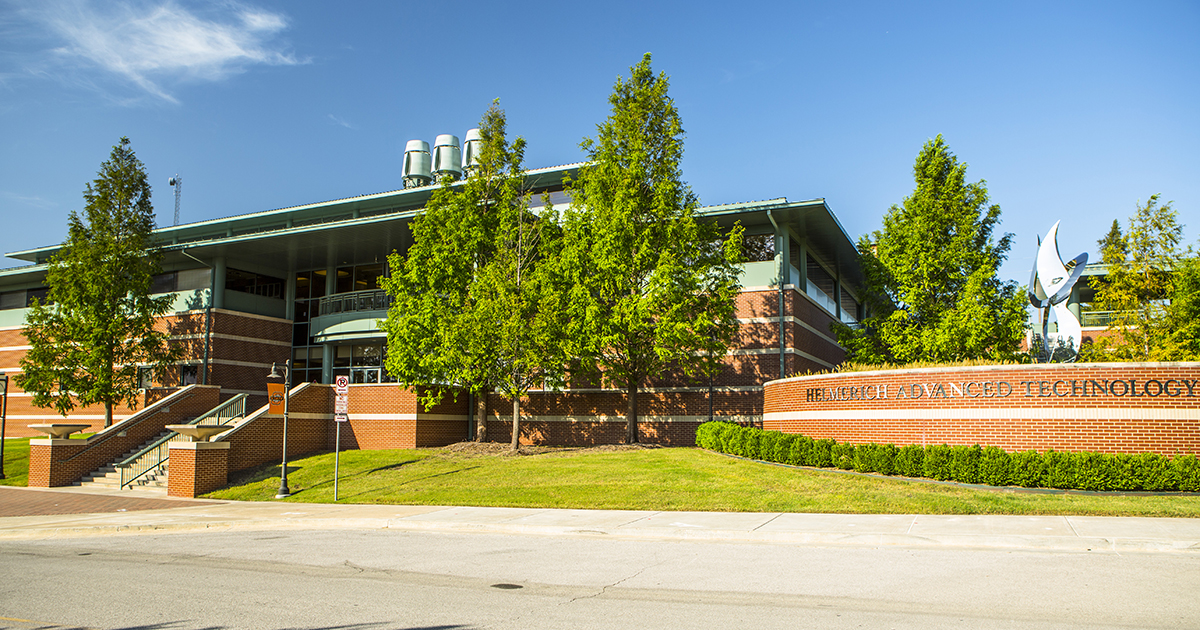
Oklahoma State University-Tulsa’s Helmerich Research Center (HRC) is leading the charge in unmanned aerial system (UAS) advancement in Tulsa, with a lot of drone-related activity happening on campus.
But with all the new names and acronyms on campus, who’s doing what with drones at the HRC?
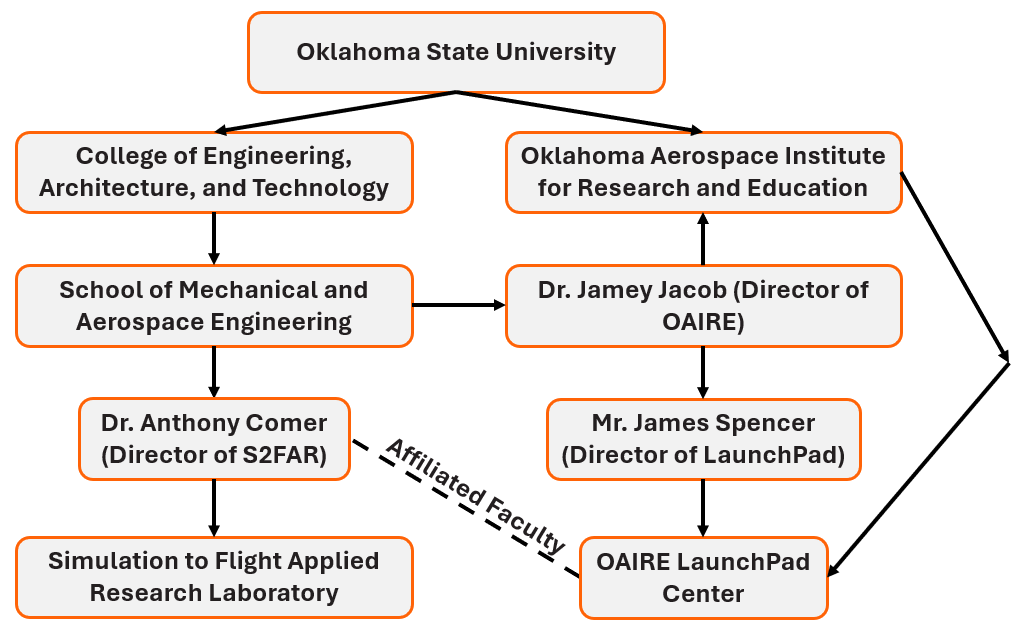
“I actually made a flowchart, since I had so many questions about it,” Dr. Anthony Comer said.
Comer is OSU-Tulsa’s newest mechanical and aerospace engineering faculty member and the director of the Simulation to Flight Applied Research Lab (S2FAR).
When it comes to unmanned aircraft tech at OSU-Tulsa, there are three big names to know: The Oklahoma Aerospace Institute of Research and Education (OAIRE), the OAIRE LaunchPad Center and the S2FAR Lab.
Between OAIRE, the LaunchPad and S2FAR, UAS and aerospace research and advancement has been increasingly in-focus at the HRC. But what is the role does each of these play?
When it comes to aerospace developments, OAIRE is the big picture. It’s a statewide entity, with locations in Stillwater, Oklahoma City and Tulsa. The OAIRE team consists of affiliated faculty, engineers, researchers and student technicians, working together to drive solutions, ignite collaboration and connect aerospace and aviation across OSU and beyond.
The LaunchPad Center, located in the HRC, is Tulsa’s slice of OAIRE. The center exists under the umbrella of OAIRE, with a business-specific focus. It exists in collaboration with Tulsa Innovation Labs, sharing a $10 million U.S. Economic Development Administration grant.
“LaunchPad is basically meant to kickstart small businesses relationships,” Comer said. “I guess you could say it’s an accelerator for business.”
LaunchPad’s mission is to take innovation in advanced aerial mobility and apply it to create new jobs, new tech and new companies in the Tulsa area. LaunchPad is set up to help local companies solve problems quickly and efficiently, giving Tulsa-area organizations a competitive edge.
Comer also has his own lab — S2FAR — which lives outside of the OAIRE umbrella, existing under the OSU College of Engineering, Architecture and Technology umbrella, specifically the School of Mechanical and Aerospace Engineering. The scope of S2FAR is precise and specific — turning vehicle concepts into real vehicles.
“Basically, someone will bring us a drawing and say ‘hey, I want to make this fly.’ And we take that concept vehicle and simulate it, creating what people refer to as a digital twin — essentially an exact replica of the real vehicle in a simulation environment,” Comer said.
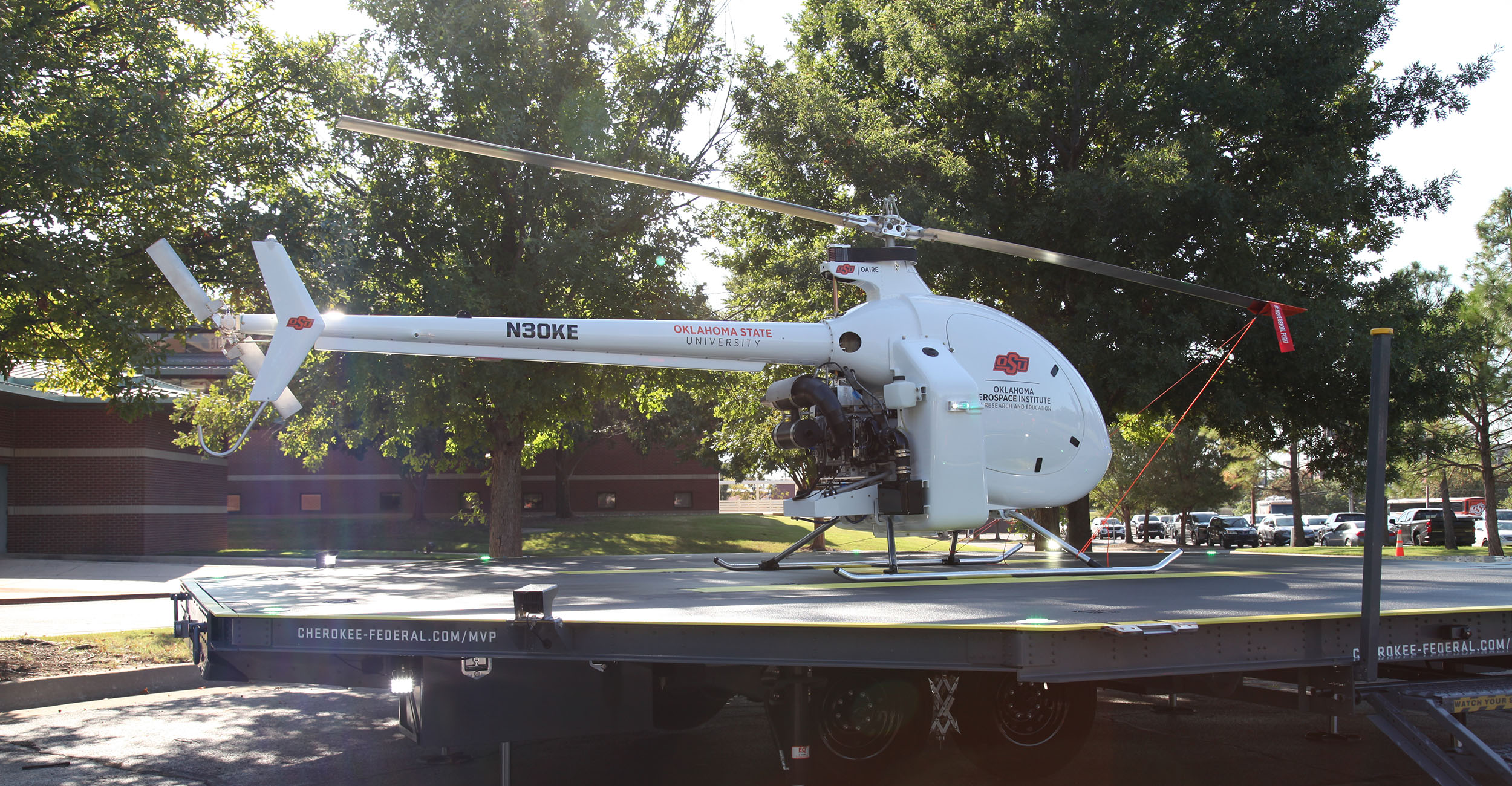
When they’re done with the simulated model, the S2FAR team takes it to the next step, building functioning full-scale or sub-scale models of the vehicle, depending on the clients’ needs.
Naturally, being under the same roof with similar goals, there’s a bit of crossover and cooperation between OAIRE and Comer’s lab too.
“I’m considered to be a LaunchPad affiliate faculty. So I work with LaunchPad, and I work with OAIRE,” he said. “S2FAR can use some of their resources and personnel if needed, we can provide support and my graduate students can work on projects that benefit LaunchPad. We have a synergistic, symbiotic relationship, and it works out well.”
All this drone activity on campus has turned OSU-Tulsa into a hotspot for drone-related events as well — like the annual Thunderbird Drone Festival or the recent drone-focused Oklahoma-Ireland Business Conference — which help foster drone-related business development in Tulsa.
To get connected and learn more about how OSU-Tulsa is a growing part of global leadership in emerging aerospace technology, visit the OAIRE and S2FAR websites.